
Is This Already Socialism?
by Florian Osuch
In Berlin, around 220,000 rental apartments are to be socialised. It's being called day-to-day socialist politics. The process is at a decisive stage.
Berlin is arguing over who owns the city’s rental buildings — and this time the dispute could lead to a forward-looking decision, one that will likely radiate far beyond Berlin. Five years ago, in September 2021, Berliners voted in a referendum to socialise the holdings of large, profit-oriented housing corporations: around 240,000 apartments were to be transferred into public ownership in exchange for compensation, based on a corresponding article on socialisation in Germany’s Basic Law. About 59 per cent voted yes — one of the most remarkable left-wing election results seen in Europe in recent times. The focus was above all on Deutsche Wohnen, the publicly listed real-estate giant that became a symbol of growing anger over rising rents, deteriorating building stock, and speculation with housing.
Years of political standstill followed. Berlin’s city government convened a panel of experts, which concluded in 2023 that such a socialisation law would be constitutionally possible. But the CDU–SPD government stalled the citizens’ vote.
The initiative “Deutsche Wohnen & Co. Enteignen,” which organised the referendum, has since drafted its own bill with the help of lawyers and is now pushing for a second referendum.
At the same time, elections for Berlin’s parliament, the Abgeordnetenhaus, will take place on September 20, 2026, with housing as the central issue. The election is likely to decide whether this experiment in municipal socialisation survives or becomes a footnote in the history of Berlin’s housing crisis. Socialisation is supported by the Left Party (Die Linke), which represents democratic socialism and belongs to the European left-wing faction GUE/NGL (as does Sinn Féin). The Greens were initially hesitant but have since also come out in favour of implementing the referendum. Both parties poll at roughly 16–20 per cent and would depend on cooperation with the SPD to form a progressive city government — but the SPD strictly rejects socialisation.
Established politics and the mainstream media largely underestimated the initiative and its successful referendum. But the situation has since changed: the Left Party is now a parliamentary force pushing for implementation, and the initiative is preparing a second referendum independent of what happens in parliament. There, the Left Party is under pressure to succeed — some of its former activists are now running as candidates. Rouzbeh Taheri, spokesperson for “Deutsche Wohnen & Co. Enteignen” until 2021, is running for the party in Neukölln, where it is especially strong. If the Left Party fails to honour its commitments to implement the referendum, it could have disastrous consequences for its future election results. The party's clear stance on affordable rents and socialisation is a decisive factor for many voters.
““Established politics and the mainstream media largely underestimated the initiative and its successful referendum.””
Attack on Socialisation
Berlin’s business associations and the real-estate lobby now fear that socialisation could succeed. The federal government under Chancellor Friedrich Merz (CDU) even wants to ban the socialisation of large housing corporations by law, an agreement reportedly reached with the SPD in early July. “Ban” is the wrong term — the states are meant to be stripped of their authority to carry out socialisation, since the federal government cannot fully ban it outright: it is anchored in Germany’s constitution. Article 15 states that land, natural resources, and means of production can be transferred into common ownership in exchange for compensation.
Merz justified the planned ban by arguing that even the debate around it creates international uncertainty among investors. Vice-Chancellor Lars Klingbeil (SPD) said the goal was to build new housing, not to expropriate, adding that he had recently met with real-estate lobbyists who told him they did not want to invest in the capital under these conditions. From the tenants’ perspective, arguably nothing better could happen than investors staying away. Urban-planning professor Barbara Schöning of Bauhaus University Weimar shares this view: speaking to Berlin daily newspaper taz in July, she argued that discouraging investors interested only in speculative profits is hardly regrettable. What Berlin needs, she said, are investors interested in housing quality and vibrant neighbourhoods. Some companies, in her view, own so many apartments that their monopoly distorts prices and diverts housing toward speculation — something socialisation could stop, and which has nothing to do with “socialism”. [1]
Socialisation is also regulated in the constitutions of some states, including Hesse, Bremen, and Saarland. Bavaria’s constitution goes further still, allowing large banks and insurers to be transferred into common ownership. These provisions are a direct consequence of German fascism: large parts of the business elite supported the Hitler regime and profited from the destruction of the trade unions and the banning of the KPD and SPD. Many large corporations even operated their own concentration camps and used forced labourers, including Volkswagen, Siemens, and Daimler. After liberation from fascism, the parties agreed on an “anti-capitalist postwar consensus” spanning conservatives, social democrats, and the then still-legal KPD — though the socialisation article largely fell into obscurity, since it was never applied.
The Demand for Expropriation
Rapid gentrification and rising rents sparked numerous protests in Berlin from around 2000 onward. Tenants resisted evictions, rent increases, and the deterioration of their buildings, and the privatisation of formerly public housing was sharply criticised. The demand for re-municipalization or buyback of individual buildings came first; only later did the demand for expropriation emerge. Historian and tenant activist Ralf Hoffrogge notes in his book “Das laute Berlin” (2025) that demonstrations generally produced no concrete success, so “new paths had to be pursued”.[2] Berlin’s strong tradition of common-good-oriented housing moved into focus, and concepts of the commons were applied to housing — the aim being to organise housing entirely without capitalism, similar to public education, police, fire services, or waste collection. In 2018, the initiative presented its plan based on Article 15: large private housing corporations should be socialised.
The path taken was direct legislation by referendum, which initiatives can force by collecting a set number of signatures — around 175,000 in this case. The 2021 vote called on Berlin’s government to take all necessary measures for socialisation but was not legally binding. Notably, the votes in favour exceeded the combined totals of the SPD, Greens, and Left Party — meaning voters from the Christian-conservative and even far-right spectrum must also have voted for socialisation.
Since the government could ignore the referendum result, the initiative had its own bill drafted and is now planning a second, more concrete referendum specifically on that bill. It may still take years before a new vote is held, but a majority in favour would bring the law immediately into force.
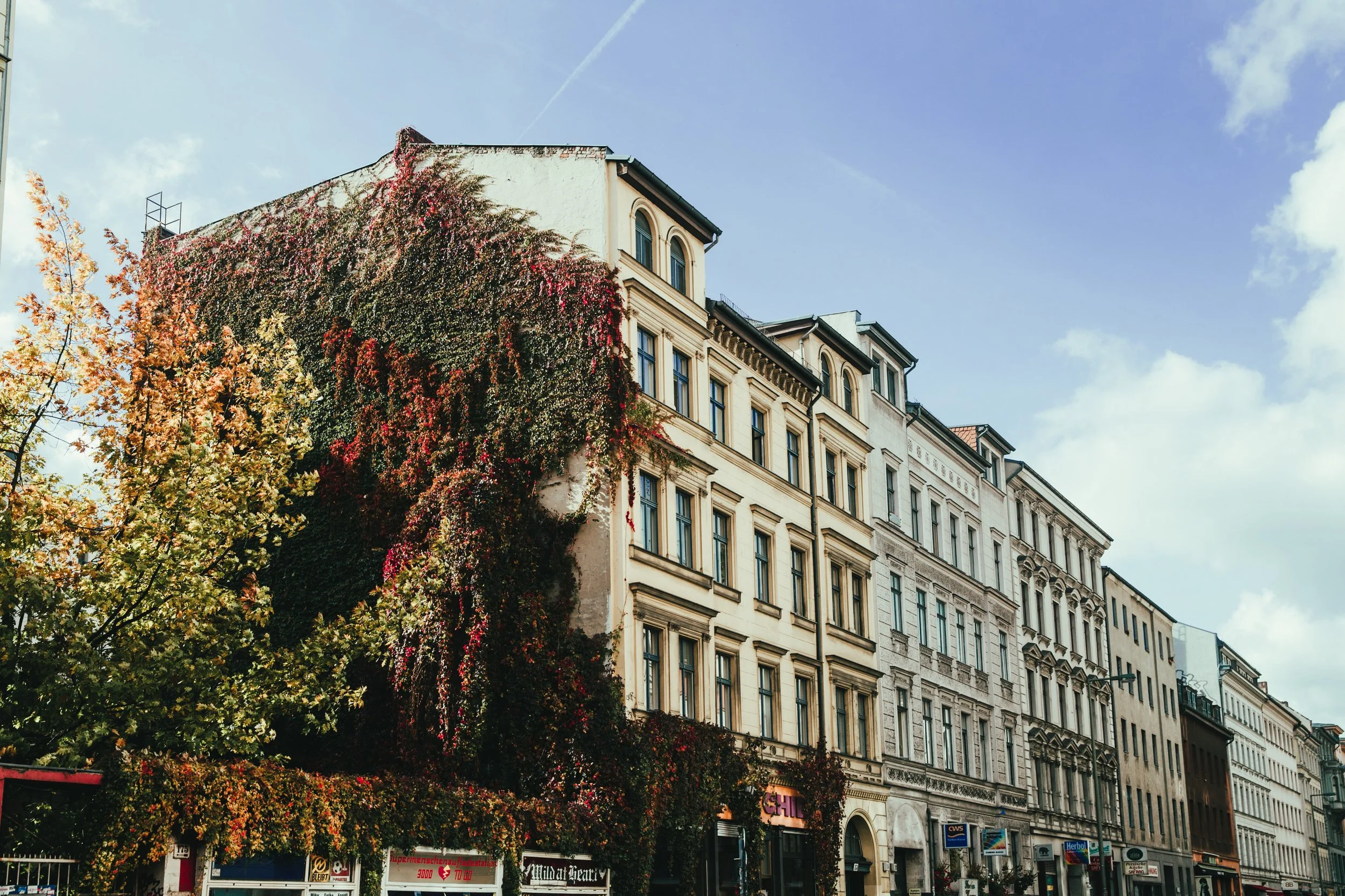
The law would affect profit-oriented companies with more than 3,000 apartments in Berlin: Deutsche Wohnen, Covivio (France), Adler Group (Luxembourg), Akelius, and Heimstaden (both Sweden) — roughly 220,000 apartments and their associated land in total. Exempted are state-owned housing companies, cooperatives, and nonprofit and church-affiliated providers.
The Point of Contention: Compensation
The Basic Law requires socialisation to occur only in exchange for compensation, but how much? Some activists demand corporations receive only a symbolic one euro per apartment, while the corporations want peak market prices plus compensation for lost profits. The law requires a “fair balancing of the interests of the general public and those affected.”
The question centers on how the value of properties and land is determined. The initiative’s draft distinguishes strictly between building and land value. Buildings would be compensated at current new-construction cost, with deductions for needed renovation. Land is different: since it isn’t produced, it’s a special kind of commodity that early economists — Adam Smith, David Ricardo, Karl Marx — examined closely. Price and value can diverge sharply under capitalism (a cola might cost one euro at the supermarket or eight in a bar), and rising land prices, in this view, result not from any owner effort but from increased demand — more a product of the wider community than of the owner.
The “socialisation value” adds building and land values together, with total compensation set at 40 to 60 per cent of market value — a fair balance, since the corporations’ speculative “surplus profit”, as Marx called it, would go uncompensated. Estimates of the total sum vary widely: the Berlin Tenants’ Association arrives at 13.7 or 7.3 billion euros; the Berlin government estimates 32 to 40 billion; a research team led by sociologist Andrej Holm, commissioned by the initiative, arrived at 10 to 17 billion. The final figure would require assessing every building and parcel individually.
Compensation would be paid via debt certificates comparable to government bonds, with a 3.5 per cent annual interest rate and a 100-year term. This lets corporations resell the certificates immediately — to pension funds or insurers seeking safe, long-term returns — while repayment comes from a portion of rental income, meaning Berlin itself would take on no new debt.
Berlin: City of Renters
““Since the 19th century, Berlin has been above all a city of renters — a major exception among European metropolises.””
Whether and how the federal government can stop socialisation remains unclear. Come autumn, Berlin may have a city government led by the Left Party, which could set socialisation in motion without a new referendum.
Understanding why this issue is so politically charged requires looking back. Since the 19th century, Berlin has been above all a city of renters — a major exception among European metropolises. Industrialisation brought rapid population growth, with working-class families packed into densely built tenements while housing construction remained largely private. The first housing cooperatives emerged as a countermodel in the late 19th century, building tens of thousands of apartments under self-administration and without a profit motive, treating housing as a long-term social task rather than a speculative object. For example, the “bbg Berliner Baugenossenschaft” was founded in 1886 and is one of the oldest cooperatives in Berlin. Its portfolio comprises more than 7,000 apartments across several large complexes. It is one of the largest of Berlin's 80 cooperatives.
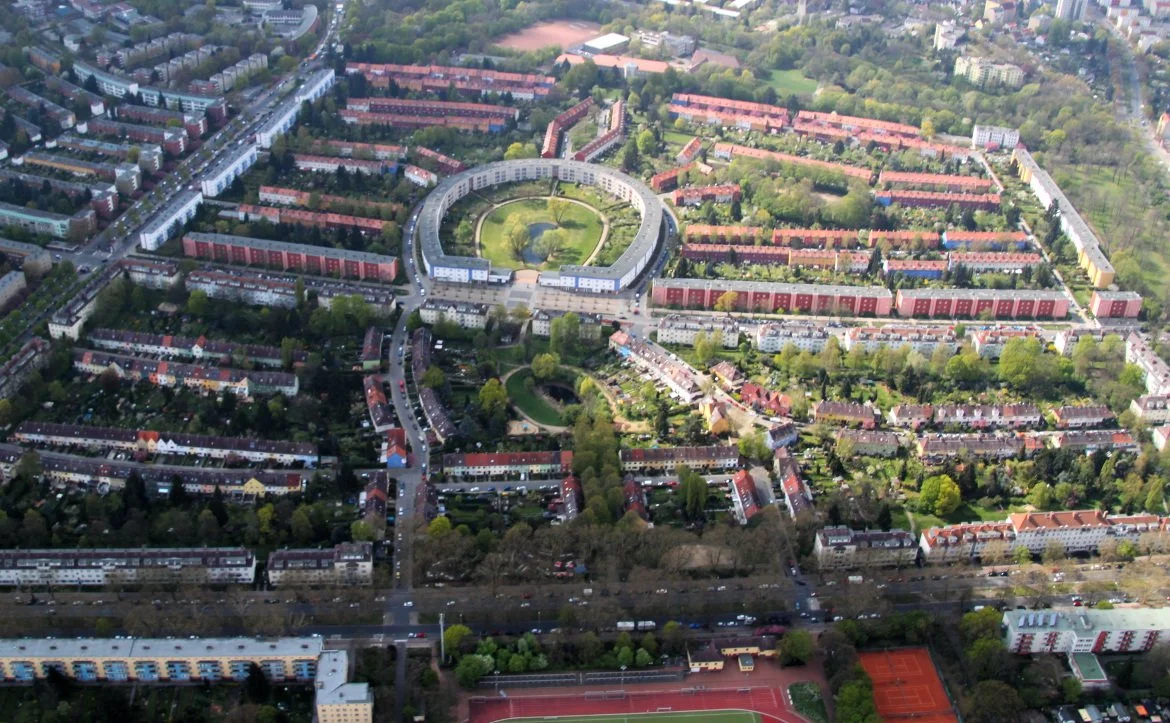
After the First World War, the state's role changed fundamentally. In the 1920s, Berlin launched one of the era's largest housing programs, building modern estates with green spaces and affordable rents — many, like the “Hufeisensiedlung”, still shape the city today. The threefold structure established then — private ownership, municipal housing, and cooperatives — persists in Berlin to this day.
Fascist rule from 1933 destroyed this development, and the war left the city heavily damaged. After 1945, East and West Berlin developed opposite models: state-controlled housing in the socialist East (GDR), with huge modern estates from the 1960s onward, versus greater private ownership in the capitalist West, though the state there too steered extensive construction.
Reunification in 1990 brought a new phase: East Berlin’s housing stock was reorganised and partly privatised, new large cooperatives formed with over 10,000 apartments each, and the heavily indebted state of Berlin sold many of its own apartments to private investors into the early 2000s.
From around 2010, demand grew sharply and gentrification reshaped neighbourhoods like Kreuzberg, Friedrichshain, and Prenzlauer Berg — arriving later than in Amsterdam, Barcelona, London, or Paris, but far more rapidly, with rents and prices rising almost abruptly. Large housing companies and international investors became visible market players, alongside a tourism boom, luxury renovations for high earners (spurred by the government’s relocation from Bonn), and an influx of startups attracting well-paid “expats” who could afford inflated rents.
Berlin today faces a question that has repeatedly shaped its history: is housing primarily a commodity, or a public responsibility? Only about 16 per cent of Berliners own their homes; 84 per cent rent. Of rental apartments, about 21 per cent belong to state-owned companies (high for a European metropolis), 11 per cent to cooperatives (a great Berlin tradition), and 68 per cent to private owners — a category spanning both individual landlords and large listed corporations like Heimstaden, Vonovia, and Adler Group. Socialisation targets only the corporations.
Today’s Berlin housing landscape is thus the result of more than a century of oscillation between private ownership, non-profit cooperatives, and state responsibility.
Day-to-Day Socialist Politics
Within the socialist movement, debates are underway about extending socialisation to other areas. Researcher Ralf Hoffrogge recently called this “day-to-day socialist politics”, criticising how debates about socialism often unfold in overly academic terms.[3] Socialisation, he argues, could bridge everyday struggles over taxes, prices, and rents with the ownership question at the core of socialist politics — a sign of hope whose potential for a broader societal narrative remains largely untapped. He elaborates that socialisation means establishing democratically administered common property, with democratic self-administration distinguishing it from nationalisation: an entry point into an economic democracy where employees, consumers, tenants, and patients are included in planning production and services, their specific knowledge of needs and working conditions enabling better work and provision.
““Socialisation...could bridge everyday struggles over taxes, prices, and rents with the ownership question at the core of socialist politics — a sign of hope whose potential for a broader societal narrative remains largely untapped.””
Florian Osuch (48) works in vocational education and is a freelance author. For several years he has been active in the fight for climate justice and affordable housing in Berlin.
Further information: www.dwenteignen.de
[1] Barbara Schöning: “Wir wohnen radikal ungleich”, taz, 12 July 2026, https://taz.de/Professorin-ueber-Vergesellschaftung/!6195012/
[2] Ralf Hoffrogge: Das laute Berlin (Berlin, 2025)
[3] Ralf Hoffrogge: “Ist sozialistische Tagespolitik möglich?”, nd, 5 August 2026, https://www.nd-aktuell.de/artikel/1201601.debatte-um-vergesellschaftung-ist-sozialistische-tagesspolitik-moeglich.html