Tidal Enclosure: Seaweed and the New Privatisation
by Patrick Flynn
Along Ireland’s western coast, in some of the Irish language’s strongest remaining heartlands, there exists a lucrative natural resource, one whose value may surprise the unfamiliar. Long stigmatised in Ireland as a ‘famine food’, eaten by the very poorest in times of starvation in previous centuries, seaweed is now big business, with uses in everything from pharmaceuticals and construction to cosmetics and animal feed, and feel-good newspaper articles extolling it as a fashionable ‘superfood … the most nutritious form of vegetation on the planet.’[1] Seaweed collecting rights, a flashpoint between Anglo-Irish landlords and their tenants during the Great Famine, are once again at the heart of a battle in Ireland’s coastal communities. In the last decade, the state-owned company previously charged with harvesting seaweed has been bought out by a private Canadian-based firm, which has submitted applications to harvest huge amounts of seaweed along the western coast, threatening seaweed forests and meaning local families whose rights to collect seaweed locally had previously been respected are now being threatened with losing these rights to a multinational corporation. What will be the consequences of this for our Gaeltacht communities, as well as the marine ecosystems off the western coast? And how successful will the public challenge to these extensive proposals for large-scale seaweed harvesting off our coasts be?
The international context
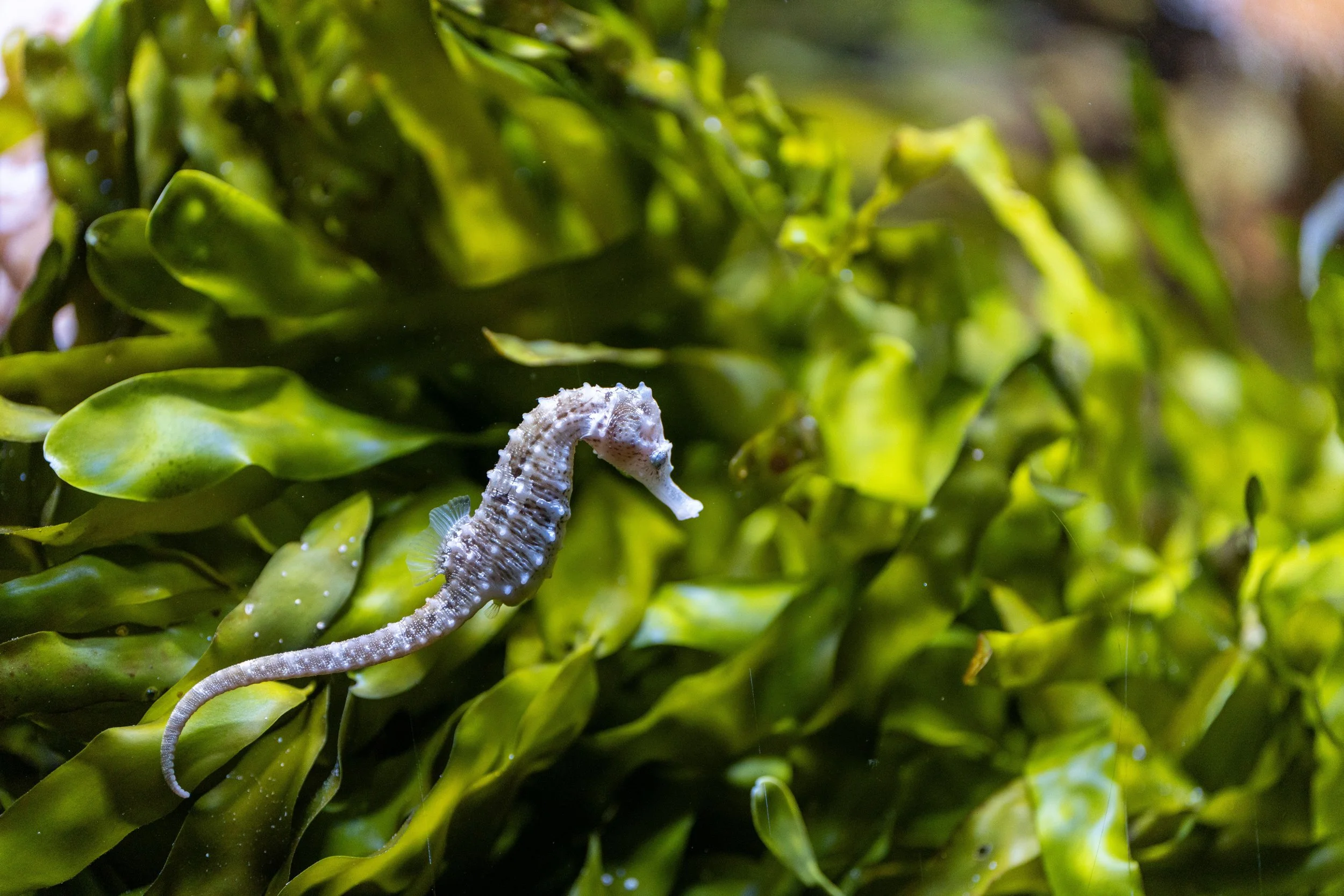
While as late as the 1980s scientists had little understanding of the importance of seaweed in marine environments, we now have a much greater understanding of their role in maintaining aquatic ecosystems. Making up an estimated 74 per cent of global vegetated oceanic life, a landmark 2025 global academic report by British and Malaysian universities outlines their many uses: in terms of maintaining life in our seas, seaweeds ‘provide food and shelter to marine life, capture carbon and produce oxygen, filter pollutants and improve water quality’. Alongside this, they also have an increasing commercial use, providing ‘feeding, breeding, spawning and nursery grounds for fish of many of the world’s commercial fisheries and the foundation of the seaweed aquaculture industry’. Yet developments such as climate change, ocean warming, the construction of seawalls and piers, the spread of invasive species of seaweed such as sargassum in non-native environments, runoff of land pollutants, and the use of artificial fertilisers in seaweed aquaculture are all threatening seaweed populations. While the seaweed industry is a major one worldwide – the global market is expected to grow by 8.2% between 2023 and 2032, from $17.1bn in 2023 to $34.6bn by 2032 – its rise is coinciding with the decline of seaweed populations, ‘alarming losses’ being reported on China’s coastline and islands in particular. [1]
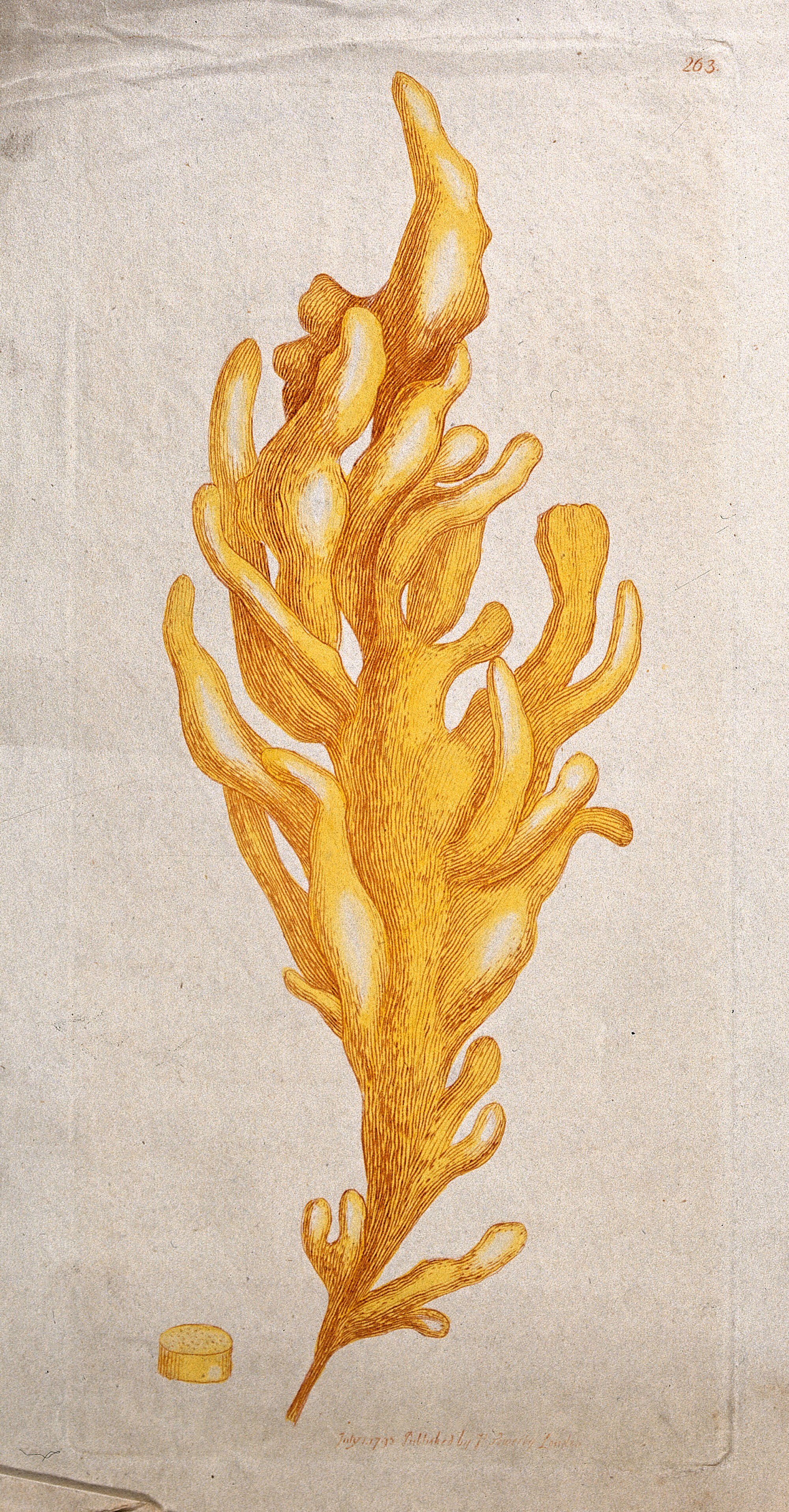
Ireland hasn’t been an outlier in the rise of the commercial use of seaweed, particularly given the diversity of the seaweed species off our shores. Since scientific research on Irish marine algae commenced seriously in the first part of the nineteenth century, over 500 different species of seaweed have been identified in Irish waters. This unusually high level of diversity for an island of Ireland’s size is explained by the fact that Ireland ‘straddles the northern limit for some warm-water species and the southern limit for some cold-water species’. One reef, located in Finavarra, Co. Clare, contains over 336 species alone, arguably the highest level of seaweed diversity of any point off the Irish coast. Seaweed is used in everything from industrial cosmetics – knotted wrack, or feamainn bhuí, is a key ingredient of some slimming products and shower gels – to the increasing craze of seaweed baths in the spa industry, to biomedicine - Irish moss, or carraigín, is an anticoagulant that can also be used to treat bowel problems and stomach ulcers.[3]
Seaweed & Irish communities
For many Irish people who live away from the coast, the importance of seaweed to our marine ecosystems and its increasing economic value may come as a surprise. As Jess Spear has written in these pages previously, in a piece which touches on the role of kelp in maintaining sea urchin populations, ‘For a nation completely surrounded by ocean, I’m always surprised that Irish people seem to go about their lives unaware that just offshore lies a rich ecosystem abundant with life.’[4] But coastal communities are well aware of the value of seaweed, which has been used as an essential resource for centuries. As seaweed is an excellent source of potassium and nitrogen, it was an ideal manure for sandy coastal soil; one scholar noting that ‘for small farmers residing along Ireland’s coastal fringe, obtaining a perceivably free sea-sourced manure was a matter of survival’. Seaweed became part of the wider agrarian agitation which enveloped Ireland in the nineteenth century, as litigious landlords sought to prosecute smallholders or tenant farmers who collected seaweed deposited by the tides. With the ownership of the Irish foreshore in this period being held by the British Crown, Anglo-Irish elites naturally had an upper hand in these disputes. Tenants could usually only mount a successful defence in court if they could demonstrate that their family had had customary rights to collect seaweed along that specific part of the foreshore.[5]
In Connemara, where many coastal households have harvested seaweed for generations, still citing the long-established customary use established by their ancestors, it’s not surprising that seaweed collecting and the Irish language are fite fuaite (interwoven; the Irish somehow captures the meaning here better) in local culture. On Inis Meáin, where adult immersion courses for visitors from the mórthír (mainland) seeking to improve their Irish are a significant part of the tourist economy, the island’s lone shop-cum-post office features prints of creathnach (dillisk) for tourists to buy. Literature such as Feamainn Bhealtaine (Spring Seaweed), the Aran poet Máirtín Ó Direáin’s only prose work, or ‘Dúlamán’ (channeled wrack), the traditional song about an exchange between two seaweed collectors recently covered by the Belfast ‘tradtronica collective’ Huartan, illustrates the vital role of seaweed in these communities. [6]
Arramara Teoranta and collecting rights
The current bid for large-scale extraction along Irish coasts can be dated to the sale of former semi-state body Arramara Teoranta to the Canadian firm Acadian Seaplants in 2014. The history of Arramara is worth tracing. Founded in 1947 as Alginate Industries, by 1957 it was operating as Arramara Teoranta under the auspices of the Minister of the Gaeltacht, with facilities in Gaeltacht areas such as Cill Chiaráin, Connemara and An Clochán Liath, Donegal. But by 2006, state agency Údarás na Gaeltachta, which then had a 100% share in Arramara Teoranta, commenced the process of privatising the body, a process completed eight years later when Acadian Seaplants bought the firm for an initially undisclosed sum.[7] This move was widely criticised, with many of the details left opaque; the sale was not publicly advertised, cabinet approval was not sought, and the question of whether the deal was contingent on harvesting rights was left unclear.[8]
The sale price was eventually revealed as E3 million nine years later, when the confidentiality clause regarding the sale had expired. Tellingly, Údarás na Gaeltachta minutes from March 2013 had mentioned ‘iarmhairtí tromchúiseacha a bheith ann don Údarás dá scaoilfí aon eolas faoin gcomhaontú’ (serious consequences if any information about the agreement were to be released).[9] The privatised Arramara Teoranta has applied to harvest seaweed in Cashla Bay, Kilkieran Bay, Mace Head and Bertraghboy Bay, all of which are based along the Connemara coastline, with five revised applications under consideration “to undertake the harvesting of seaweed from the intertidal foreshore in sustainable quantities”.[10] An online petition in opposition, which has gained thousands of online signatures, illustrates the anger at the move; condemning the development as leaving other impacted communities in Galway, Kerry and Mayo ‘with no input into how their land and environment was being treated’, it now stands at 21,000 at the time of writing.[11]
It is important that this privatisation of such an important company is not overlooked as a provincial issue affecting only a few remote communities, but acknowledged as a significant privatisation of a major part of our marine ecosystem. While former Irish Times western correspondent Lorna Siggins, a journalist with a record of covering environmental issues like the Rossport Gas Pipeline extensively, gave important attention to Arramara Teoranta’s sale in 2014, in recent months the Dublin-based media have been comparatively slow in giving this matter the attention it deserves. Given the geography of these communities, it’s no accident that this issue has been much more prominent in Irish language media, being regularly covered on Raidió na Gaeltachta’s morning news show Adhmhaidin, TG4’s weekly current affairs roundup 7 Lá, and the online news website tuairisc.ie. It’s perhaps only behind the Gaeltacht housing crisis as a topic of focus in Gaeltacht-based media in recent months, reflecting the fact that the communities impacted by this issue are in some of the strongest remaining Gaeltacht areas in the country.
For ecosocialists, it’s also important we intervene in these debates to illustrate the hypocrisy of some of the local politicians on this issue. For the two politicians who came in first and second place in the recent Galway West by-election, the victorious candidate, Seán Kyne, is a member of Fine Gael, a party in power when the privatisation of Arramara took place. His nearest rival, Noel Thomas, is a former member of Fianna Fáil, who were in government when the proposals to privatise Arramara were initiated. While both portray themselves as concerned with defending seaweed collecting rights, neither has any real ideological disagreement with privatisation, or connected the issue to the wider crisis of biodiversity loss.
As People Before Profit reviews its by-election performances and seeks to grow in areas such as Galway, building the knowledge and skills within the party to intervene in environmental debates in local areas, including Irish language proficiency, is important. This is particularly the case in light of the renewed prominence of Irish language rights as a social issue intimately connected to wider social causes in the aftermath of the Catherine Connolly campaign, and the emergence of new Gaeltacht campaigns like CATU’s counterpart in the Gaeltacht, Bánú. In the context of the number of daily Irish speakers in the Gaeltacht continually declining, with a further 1.6% decrease between 2016 and 2022, the survival of these communities is crucial to the survival of the language as a whole.[12] And crucially, this issue highlights that as ecosocialists we must continually link the climate and biodiversity crises to practical demands within our areas on a principled basis, emphasising that the defence of our marine ecosystems and coastal communities is inextricably interwoven, and the enclosure of our seaweed populations by private corporations is disastrous for biodiversity and communities alike.
Notes
[1] Marie Kelly, ‘From famine to feast: the Irish seaweed revival’, Irish Times, 8 June 2025.
[2] Clive Cookson, ‘Seaweed conservation ‘inadequate’ to fight alarming loss, report finds’, Financial Times, 9 June 2025.
[3] Stefan Craan, ‘ How seaweed is used in Ireland’, Irish Heritage Council, https://www.heritagecouncil.ie/content/files/irelands_coastline_seaweed_2008_4mb.pdf
[4] Jess Spear, ‘Save our seas, save ourselves’, Rupture Issue 5, Autumn 2021.
[5] Cianna Devitt, ‘The long but largely forgotten history of Irish seaweed disputes’, RTÉ Brainstorm, 17 April 2026, https://www.rte.ie/brainstorm/2026/0417/1568194-ireland-seaweed-access-legal-disputes-history-farmers/
[6] Máirtín Ó Direáin, Feamainn Bhealtaine (Baile Átha Cliath, 1961); ‘Dúlamán’, Songs in Irish, https://songsinirish.com/?song=dulaman-anuna-lyrics; Huartan, ‘Dúlamán (Official Music Video’), April 2026. https://www.youtube.com/watch?v=eHL0drOQjKw.
[7] Arramara, ‘Our History’, https://www.arramara.ie/our-story/history/
[8] Lorna Siggins, ‘State accused of squandering lucrative seaweed sector’, Irish Times, 25 August 2014.
[9] Máirtín Ó Catháin, ‘€3 milliún a íocadh ar Arramara Teoranta, praghas a coinníodh faoi rún le nach mór deich mbliana’, 18 Aibreán 2023.
[10] ‘Galway County Council shows support for traditional harvesters’, Connacht Tribune, 26 February 2026.
[11] Petition:‘Stop large corporations harvesting huge forests of seaweed from the west coast’
[12] Conradh na Gaeilge, ‘Meascán mearaí den mhaith agus den olc atá i bhfigiúirí nuafhoilsithe #daonáireamh2022 maidir leis an Ghaeilge agus An Ghaeltacht’, 30 Bealtaine, 2023.